Independent editorial buying guidance. Commercial links, when used, are identified. Read our affiliate disclosure.
Start with the situation, not the specification
On a woodland walk, a bird may appear only briefly between branches. Binoculars need to be easy to raise, focus, and hold still during that moment. A traveler watching distant scenery from a viewpoint has a different routine. Start with the subject and the distance you expect, then consider how much equipment you want around your neck all day.
The details worth checking
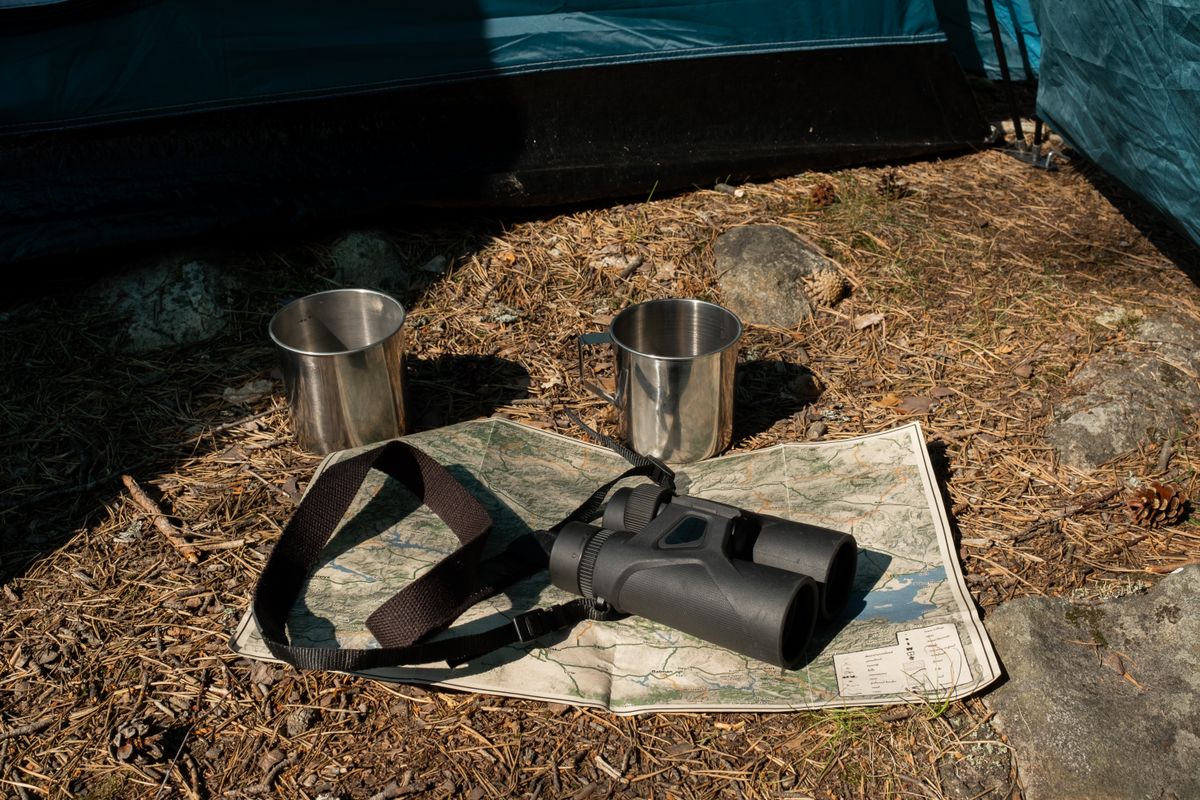
Check the magnification and objective size together with weight, field of view, and handling. Greater magnification is not automatically easier to use by hand. Try following a moving subject and finding it again after lowering the binoculars. If you wear glasses, assess the eyecup arrangement and whether you can see the useful field comfortably.
The tradeoff that changes the choice
A compact pair may be easy to carry but have controls that feel cramped in cold hands. A larger pair may be comfortable to grip while becoming tiring over a long day. Weather protection and durability should match your trips. Look at the precise model’s documentation rather than assuming every outdoor-looking design has the same sealing.

Set it up for ordinary ownership
Learn the focus and individual eye adjustment before traveling. Use the recommended strap and lens protection, and clean optical surfaces with suitable methods. Do not point binoculars at the sun. Pack them so loose items do not strike the lenses. A simple carrying arrangement that permits quick access is often more useful than an elaborate accessory bundle.
Where to save your money
Avoid buying for the strongest magnification in the price bracket. Clear, comfortable viewing is the aim. If you mostly travel with a small shoulder bag, weigh the complete case and strap. Shop where you can assess handling or understand return conditions, because a specification sheet cannot fully describe whether the controls work well in your hands.
Try finding a subject before inspecting fine detail
Choose a distant stationary object in a safe direction and locate it without the binoculars first. Raise them and see how easily you find it again. Adjust focus and, if relevant, the eyecups while wearing your normal glasses. Repeat after lowering them. That sequence tests the experience of a real walk better than staring at one display target for a long time. Consider controls and weight with the strap and case you will actually carry.
Would stronger magnification help with wildlife?
It can make a distant subject appear larger, but handling, field of view, and keeping the image steady also affect usefulness. A stronger specification can make finding and following the subject less comfortable for a particular user. Try the actual binoculars if possible. Pick the combination you can hold, aim, and focus confidently rather than treating the largest first number as the best wildlife choice.
| Option | Fits this routine | Main tradeoff or check |
|---|---|---|
| Compact binoculars | Travel bag and occasional viewing | Try small controls |
| Larger handheld pair | Comfortable regular observation | More carried weight |
| Existing camera zoom | Occasional distant details | Different viewing and battery experience |
Before you buy
- Comfortable handling
- Useful field of view
- Glasses compatibility
- Optical care
The considered choice
Choose the option that addresses comfortable handling and useful field of view first. Keep the setup simple enough to maintain, and verify the exact product before buying.